China Best Electric Balance Bike Supplier for Global Buyers? This question deserves more than a low factory price. Global buyers need verified production experience, consistent quality, responsive engineering, and evidence of compliance. The Electric Balance Bike market remains a specialized segment, so broad e-bike statistics should be interpreted carefully.
Grand View Research reported that the global electric bike market was valued at approximately USD 43.81 billion in 2023. It also forecast continued growth through 2030, supported by urban mobility demand and battery improvements. CONEBI’s 2024 industry report showed that European markets sold millions of bicycles with electric assistance, although sales softened after exceptional pandemic growth. These figures indicate opportunity, not guaranteed demand. Product fit still depends on age range, riding environment, battery capacity, and local safety requirements.
Trust is measurable. A capable Chinese supplier should provide factory audits, material traceability, battery test records, and documented quality-control procedures. Buyers should examine motor power, speed settings, charger protection, frame welding, brake response, and packaging performance. Compliance may involve standards such as EN 71, EN 62115, ASTM F963, and UN 38.3, depending on the destination and product configuration. Requirements differ by market, and one certificate cannot replace legal review.
Details matter. A child’s bike should start smoothly on a paved driveway, not jerk forward near a curb. Suppliers should also explain spare-parts support, warranty limits, inspection methods, and customization costs. No supplier is perfect. Marketing photos can hide weak after-sales systems. Therefore, global buyers should compare samples, audit evidence, independent testing, and communication quality before selecting China’s best Electric Balance Bike supplier.
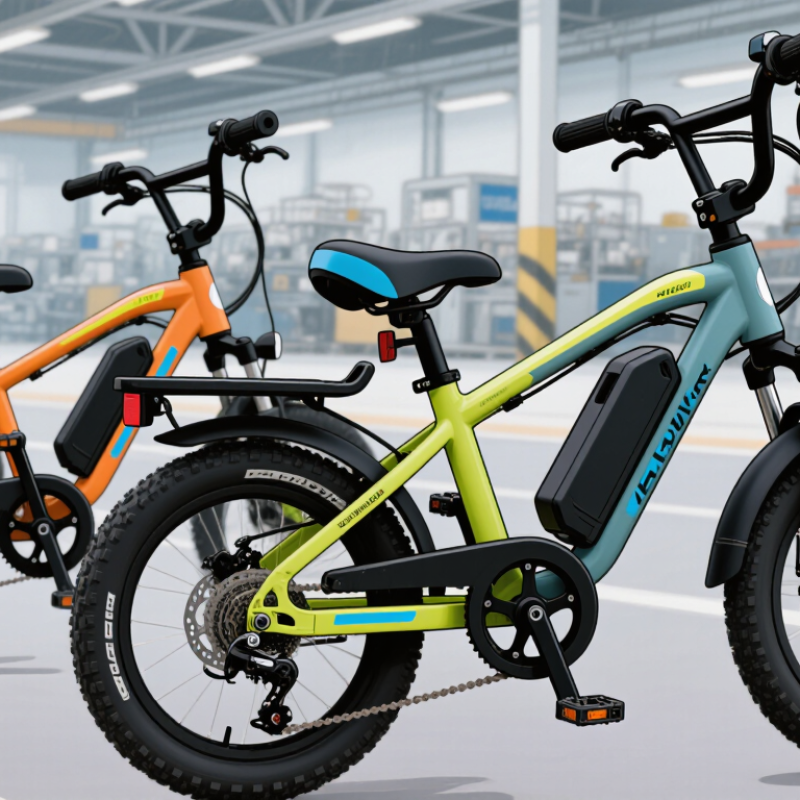
China has become a leading electric balance bike supplier because its manufacturing ecosystem is unusually concentrated. In 2023, the China Bicycle Association reported electric bicycle output above 42 million units. Electric balance bikes are not reported separately, so this figure is only a supply-chain indicator. It still reflects strong access to motors, battery packs, frames, controllers, and chargers.
Cost is only one advantage. Buyers can often source aluminum frames, molded plastics, tires, wiring, and packaging within nearby industrial clusters. This can shorten sampling and replenishment cycles. Grand View Research valued the global electric bike market at about US$37.47 billion in 2023. It also forecast a 7.8% compound annual growth rate from 2024 to 2030. However, broad market reports rarely isolate electric balance bikes. The gap matters.
Reliable Chinese suppliers provide more than attractive catalogues. They should offer battery test records, charger specifications, traceable component lists, and documented quality checks. Buyers should verify capacity under realistic loads, brake response, weld consistency, waterproofing, and age-appropriate speed limits. Compliance evidence must match the destination market, not a generic certificate. Factory audits and pre-shipment inspections reduce surprises. They do not remove them. Some suppliers still overstate riding range, especially in cold weather or with heavier riders. A careful sourcing process combines technical reviews, sample testing, and clear corrective-action terms.
Battery cost is a key factor in electric balance bike pricing. The 2024 regional lithium-ion battery pack benchmark shows China below the global average, supporting competitive sourcing and scalable production.
Data source: BloombergNEF, 2024 lithium-ion battery pack price survey. Values represent average battery pack prices in USD per kWh and are not company-specific quotations.
Choosing a Chinese electric balance bike manufacturer requires more than comparing catalog prices. A polished showroom can still hide weak process control. Request the company’s legal registration details, production address, and export history. Verify whether these records match the factory under review. Ask for a live video tour or an in-person visit. Examine battery assembly, welding areas, incoming inspection, and finished-goods storage. Empty shelves are not automatically a problem, but vague answers are.
Evaluate a sample under real riding conditions, not only on a display stand. Check frame alignment, brake response, throttle smoothness, tire grip, charger temperature, and battery range. Request test reports for battery safety, electrical protection, and charger performance from recognized laboratories. Confirm which standards apply in your target market. A document without traceable laboratory information is weak evidence. Ask how each production batch is recorded. Serial numbers, inspection photos, and defect logs make quality claims easier to trust.
A dependable supplier should explain lead times, minimum order quantities, spare-part support, packaging, and warranty handling in clear writing. Test communication before signing. Send a technical question and observe the response time, accuracy, and willingness to admit limitations. Cheap samples can become expensive problems. Pricing matters, but unstable components matter more. Compare two or three samples, because one perfect unit proves very little. Some evaluations remain uncertain; that is normal. Recheck assumptions after pilot production, especially when the factory changes suppliers or battery cells.
| Evaluation Dimension | Recommended Benchmark for Global Buyers | Evidence to Request | Buyer Verification Method | Assessment |
|---|---|---|---|---|
| Product Safety Design | Protected chain or belt drive, guarded moving parts, reliable braking, rounded edges, stable frame geometry, and a clearly defined rider age and weight limit. | Engineering drawings, product risk assessment, safety test reports, user manual, and product photographs. | Compare the physical sample with the drawings and verify that safety instructions match the intended sales markets. | High Priority |
| Electrical Safety Compliance | Testing should be aligned with the electrical-toy and battery requirements applicable in the destination market. European projects commonly review EN 62115 and related CE documentation. | Recent test reports, technical file index, Declaration of Conformity, and applicable CE supporting documents. | Confirm that the report model, battery configuration, rated voltage, and manufacturer information match the production model. | High Priority |
| Battery Quality | Battery pack should include over-charge, over-discharge, over-current, short-circuit, and thermal protection. Lithium batteries should have traceable cell and pack specifications. | Battery datasheet, BMS specifications, cell documentation, pack test records, and safety certification documents. | Check capacity consistency through a sample discharge test and verify that the battery label matches the shipping documents. | High Priority |
| Battery Transport Readiness | For lithium batteries shipped internationally, UN 38.3 test evidence and compliant packaging and labeling are normally required for air or sea transport arrangements. | UN 38.3 test summary, transport classification, packaging instructions, and relevant safety data sheet. | Ask the freight forwarder to confirm whether the proposed battery configuration and packaging can be accepted on the selected route. | High Priority |
| Performance Specifications | Supplier should publish measurable values for motor power, maximum assisted speed, riding range, charging time, rider weight, and gradient capability. | Product specification sheet, laboratory or internal test data, and a defined test condition for each value. | Repeat range and charging tests using the same rider weight, surface, temperature, tire pressure, and battery condition. | High Priority |
| Frame and Mechanical Durability | Frame, fork, wheels, handlebar, fasteners, and footrests should be tested for fatigue, impact, loosening, corrosion, and repeated loading appropriate to the product category. | Mechanical test plan, fatigue records, material specifications, torque standards, and incoming inspection records. | Inspect welds and fasteners on samples, review failure history, and perform a controlled repeated-use trial before mass production. | High Priority |
| Water and Dust Protection | Any claimed IP rating must apply to the complete tested configuration and must not be inferred only from sealed individual components. | IP test report, test configuration, laboratory details, and maintenance limitations. | Verify seals, cable entry points, charging-port protection, and the exact operating conditions covered by the claim. | Important |
| Factory Quality System | A documented quality system should cover incoming materials, in-process checks, final inspection, battery testing, calibration, nonconforming products, and corrective actions. | Quality manual, inspection checklists, calibration certificates, defect records, and corrective-action reports. | Conduct a video or on-site audit and sample records from several recent production lots. | High Priority |
| Production Capacity | Capacity claims should be supported by assembly lines, testing equipment, staffing, subcontractor controls, and documented monthly output. | Production-flow chart, equipment list, capacity calculation, and recent production schedule with sensitive details removed. | Compare stated capacity with lead time, order quantity, component availability, and observed production activity. | Important |
| Sample and Pilot Order | A pre-production sample and a pilot batch should be approved before a large purchase. The approved sample should become the reference standard for mass production. | Sample approval form, inspection criteria, pilot-batch report, and change-control procedure. | Record dimensions, colors, labels, firmware, packaging, accessories, and performance results in a signed approval document. | High Priority |
| Customization Capability | Supplier should define which items can be customized, such as frame color, packaging, labels, accessories, battery capacity, and software settings. | Customization catalogue, tooling quotation, artwork requirements, minimum order quantities, and approval workflow. | Request a written change quotation and confirm whether customization affects certification, tooling ownership, or lead time. | Important |
| Minimum Order Quantity | MOQ should be stated separately for standard products, custom colors, custom packaging, new tooling, and battery variations. | Formal quotation showing MOQ by configuration and any one-time engineering or tooling charges. | Compare the MOQ with the buyer's forecast and calculate inventory exposure for slow-moving variants. | Commercial Check |
| Lead Time Control | Quotation should distinguish sample time, tooling time, production time, battery procurement time, inspection time, and export preparation time. | Production schedule, component lead-time list, holiday calendar, and shipment-readiness procedure. | Use contractual milestones and obtain written notice requirements for delays or material substitutions. | Important |
| Spare Parts and After-Sales Service | Common spare parts should be identifiable and replaceable, including chargers, batteries, brake components, tires, tubes, controllers, throttles, and fasteners. | Spare-parts list, exploded diagrams, service manual, fault codes, and warranty process. | Check response time, parts availability, troubleshooting support, and whether replacement parts remain available after production changes. | High Priority |
| Warranty Terms | Warranty should clearly define coverage period, exclusions, labor responsibility, transport costs, battery warranty conditions, and claim evidence. | Signed warranty policy, claim form, failure analysis procedure, and service-level commitments. | Ask for anonymized examples of previous claims and confirm how defects are distinguished from misuse or normal wear. | High Priority |
| Packaging and Labeling | Packaging should protect the frame, controls, charger, battery, and accessories during multimodal transport. Labels must match destination-market requirements. | Packaging drawings, drop-test records, carton specifications, warning labels, and packing list. | Perform a packaging inspection and, where practical, a controlled drop or transit simulation before final approval. | Important |
| Export Documentation | Supplier should provide consistent commercial invoices, packing lists, product descriptions, battery transport documents, and origin information required by the shipment. | Redacted sample export documents, HS classification proposal, packing list, and battery paperwork. | Have the buyer's customs broker and freight forwarder review the documents before placing the purchase order. | High Priority |
| Traceability | Each unit or battery pack should be traceable to a production date, lot, key components, inspection result, and shipment record. | Serial-number structure, production records, barcode examples, and recall procedure. | Scan sample labels and trace them backward to inspection records and forward to the shipment documentation. | Important |
| Commercial Reliability | Supplier should provide consistent quotations, written specifications, transparent payment terms, clear Incoterms, and a documented process for engineering changes. | Proforma invoice, sales contract, Incoterms statement, change-control clause, and payment schedule. | Check whether all verbal commitments are included in signed documents before payment or production release. | High Priority |
| Independent Pre-Shipment Inspection | For international orders, an independent inspection should verify quantity, workmanship, function, dimensions, labels, packaging, and accessories before shipment. | Inspection checklist, acceptance sampling plan, defect classification, and final inspection report. | Set acceptance criteria in the purchase contract and release the balance only after the agreed inspection result. | Recommended |
For global buyers, an electric balance bike should prove safety beyond attractive colors and speed claims. CPSC’s 2023 report recorded 233 deaths and about 360,000 emergency-department-treated injuries involving e-bikes, e-scooters, and hoverboards from 2017 to 2022. The figure is broader than balance bikes, but it shows why speed control, braking, and battery protection deserve serious attention. Choose adjustable speed modes, a gentle start, reliable hand brakes, stable footrests, and a low center of gravity. A bright display can still distract a child.
Ask the supplier for reports from an independent laboratory. Check the applicable toy or bicycle requirements, such as ASTM F963, EN 71, or ISO 8098, depending on age classification and sales market. Battery systems should have documented protection against overcharge, overheating, short circuits, and deep discharge. IEC 62133-2 can support cell and battery safety evaluation, while UN 38.3 testing matters during international transport. UL 2272 or UL 2849 may apply to certain electrical mobility designs, but neither should be accepted automatically without scope verification. Request model-specific reports, serial traceability, charger details, and production inspection records. I would not trust a certificate showing only a similar model. Suppliers sometimes present beautiful documents, yet small battery changes can alter the risk profile.
How Global Buyers Can Manage Pricing, Samples, and Quality Control
A competitive quotation is only useful when every cost is visible. Ask for a detailed price sheet covering the bike, battery, charger, packaging, spare parts, and export documentation. Confirm the trade term, payment schedule, minimum order quantity, and production lead time in writing. Freight can change the final cost sharply, especially for lithium battery shipments. A low factory price may hide expensive packaging or testing requirements.
Samples deserve careful attention. Request one production-level sample, not only a polished showroom unit. Check frame alignment, weld finishing, brake response, throttle control, charger markings, and battery performance. Record each issue with photos and measurements.
We once treated a minor handlebar gap as unimportant. It later became a repeated assembly complaint. That was a useful mistake.
Sample approval should include a signed specification sheet and an agreed correction list.
Quality control needs independent evidence. Define inspection points before production begins, including incoming components, assembly torque, electrical functions, packaging strength, and random final tests. Ask for serial-number records and test reports linked to the shipment. A third-party inspection can reduce blind spots, but it cannot replace clear specifications. Keep a small payment balance until inspection results meet the agreed standard. Suppliers may resist this step. Professional buyers explain the process calmly and apply it consistently. Reliability is built through records, not promises.
Choosing a reliable electric balance bike supplier in China requires more than comparing unit prices. A dependable process starts with a written product brief. Define motor output, battery capacity, frame material, wheel size, age range, and maximum load. Request factory registration details, production photos, quality records, and export experience. Ask direct questions. Vague answers deserve caution.
Before placing a bulk order, approve a sample from the proposed production line. Test braking, throttle response, charging time, battery protection, welds, and noise. Use an independent inspection company for pre-production checks and final random inspection.
Confirm applicable safety documents for destination markets, including testing reports and labeling requirements. Do not accept copied certificates. Verify issuing bodies and document numbers. This step can feel slow, but one missed defect may affect an entire shipment.
A reliable contract should state specifications, tolerances, packaging, spare parts, warranty handling, delivery terms, and remedies. Use a protected payment schedule linked to milestones, not promises. Check carton strength with a drop test, then review battery packaging and shipping documents. Keep records of approvals, revisions, inspection photos, and communication. No checklist is perfect. A sample may pass while mass production drifts. I would reserve final payment until inspection results are accepted. After arrival, record failure rates during the first thirty days. That evidence improves the next order.
Its manufacturing clusters provide motors, batteries, frames, controllers, chargers, plastics, and packaging nearby.
No.
Ask for the bike, battery, charger, packaging, spare parts, testing, and export documentation.
Check frame alignment, welds, handlebar gaps, brakes, throttle control, charging time, and battery performance.
It records motor output, battery capacity, wheel size, maximum load, materials, and agreed tolerances.
Define inspection points for incoming parts, assembly torque, electrical functions, packaging strength, and final random tests.
Documents must match the destination market and product configuration.
Confirm battery capacity, protection features, charger markings, packaging, and required transport documents.
State product specifications, tolerances, packaging, spare parts, warranty handling, delivery terms, and remedies.
Track failures, assembly complaints, charging issues, and returns during the first thirty days.
China has become a major sourcing destination for Electric Balance Bike products because of its integrated manufacturing networks, flexible production capacity, and experience serving international markets. Global buyers can evaluate suppliers by reviewing factory capabilities, engineering expertise, quality systems, production records, communication efficiency, and export experience. It is also important to compare product specifications, including battery performance, motor reliability, frame durability, braking systems, speed controls, protective features, age suitability, and applicable safety standards.
A reliable purchasing process should begin with clear requirements, supplier screening, and sample evaluation. Buyers should compare quotations carefully by considering materials, packaging, shipping terms, customization, and after-sales support rather than focusing only on the lowest price. Quality control can include pre-production confirmation, in-process inspections, final testing, and independent verification when necessary. By establishing written specifications, payment milestones, inspection procedures, and delivery responsibilities, international buyers can reduce risks and build a more consistent, transparent, and dependable supply relationship.