China Top 10 Electric Tricycle Suppliers for Global Buyers

Time:2026-10-11 Author:Sophia
0%

Choosing a reliable Electric Tricycle supplier in China requires more than comparing online prices. Global buyers must examine manufacturing experience, product quality, export capability, and after-sales support. A polished website is not proof of strong production.

This guide introduces ten Chinese suppliers serving international markets. It considers factory specialization, model variety, battery options, load capacity, safety features, customization, and communication efficiency. Practical details matter. Can the supplier provide clear specifications? Are test reports, spare parts, and warranty terms available? Does the company explain shipping arrangements without hiding important costs?

Real buying decisions are rarely perfect. Product information may change. Supplier rankings can also depend on region, application, and order volume. A cargo model for urban delivery may not suit rural roads or steep terrain. That distinction is easy to miss. Buyer verification remains essential.

The selected companies are presented through an evidence-based perspective, using publicly available business information and common sourcing criteria. Readers should still request recent certificates, factory videos, sample units, and written quotations before placing an order. Inspect the welds closely. Check the brakes.

This overview aims to help distributors, fleet operators, retailers, and project buyers narrow their choices with greater confidence. It does not promise that one supplier fits every market. Instead, it highlights where each manufacturer may offer practical value, while recognizing possible limitations in product consistency, service coverage, and delivery performance. Some conclusions may require further verification, and that is a necessary part of responsible international sourcing.
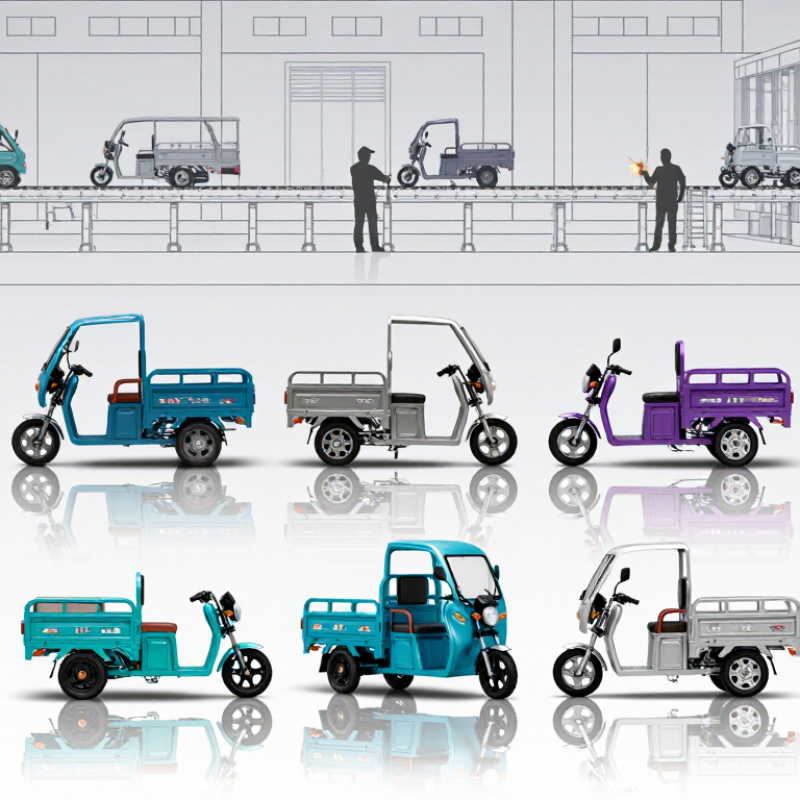
China Top 10 Electric Tricycle Suppliers for Global Buyers

Electric Tricycle Industry in China: Market Scope and Global Demand

China’s electric tricycle industry serves cargo delivery, rural transport, campus mobility, and short-distance passenger travel. Its strength comes from mature battery supply chains, dense component networks, and flexible production lines. The China Bicycle Association reports that China has hundreds of millions of electric two- and three-wheel vehicles in use, although public statistics often combine both categories.

Demand is widening overseas. The International Energy Agency’s Global EV Outlook 2024 identifies two- and three-wheelers as the most electrified road-transport segment. Electric models represented more than half of global sales in 2023, largely supported by Asian markets. Grand View Research also projects strong growth for the global electric three-wheeler market through 2030, with annual expansion in the double digits. Definitions differ.

That matters for buyers.

A delivery operator may need a reinforced rear axle, weather protection, and a 100-kilometre working range. A rural user may value repair access more than peak speed. Export suppliers increasingly provide lithium battery options, left- or right-hand controls, and adaptable cargo bodies. However, published market figures can overstate demand when electric rickshaws, cargo trikes, and low-speed vehicles are counted together. Buyers should verify payload tests, battery certifications, warranty terms, and local registration requirements before ordering. Specifications still vary widely.

How to Evaluate China’s Electric Tricycle Suppliers

China Top 10 Electric Tricycle Suppliers for Global Buyers

How to Evaluate China’s Electric Tricycle Suppliers

Supplier evaluation should begin with evidence, not polished factory videos.

The IEA’s Global EV Outlook 2024 reports that India sold about 580,000 electric three-wheelers in 2023. They represented more than half of new three-wheeler sales. This demand makes supplier reliability especially important.

Request production records, export references, and battery test reports. A certificate alone proves little.

Check the vehicle’s real working details. Ask for rated load, climbing ability, braking distance, battery chemistry, charging time, and motor efficiency. Test a sample on rough roads with a full load. Measure range in similar weather and traffic conditions.

Small differences matter. A claimed 120-kilometer range may fall sharply under heavy cargo. This is where many buyers misjudge suppliers.

Review battery traceability and after-sales support carefully. The Global Battery Alliance’s Battery Passport work emphasizes data transparency across battery supply chains.

Ask whether each battery has a serial number, test history, and clear warranty terms. Confirm spare-part availability for controllers, tires, brakes, and chargers.

I would also inspect welding points and wiring protection personally. However, one sample cannot represent every shipment.

Require pre-shipment inspection and random quality checks. Supplier selection is not perfectly scientific, and some judgment remains unavoidable.

Top 10 Chinese Electric Tricycle Suppliers for International Buyers

China’s electric tricycle industry offers many options for international buyers. This guide compares ten Chinese suppliers by manufacturing capacity, product range, export experience, and after-sales support. The focus is practical: cargo tricycles for small businesses, passenger models for local transport, and utility versions for farms or warehouses.

A reliable supplier should provide clear battery specifications, motor ratings, load limits, and charging instructions. Buyers should request test reports, factory photographs, sample units, and maintenance guidance before placing a large order. Details matter. Ask whether spare controllers, tires, brake parts, and batteries remain available after delivery. Check the frame welds, suspension response, turning radius, and braking distance during a physical inspection.

International compliance requires careful verification. Import rules, battery transport requirements, lighting standards, and road-use regulations differ between countries. A supplier may hold certificates, but buyers should confirm their validity and market relevance independently. Do not rely only on polished catalogs. Some product descriptions can be incomplete, especially concerning real-world range under heavy loads or steep roads. That weakness deserves attention. A responsible purchasing process also reviews payment terms, packaging quality, warranty coverage, and communication speed. One overlooked detail can increase landed costs significantly. The strongest suppliers are not always the cheapest; they explain limitations clearly and support documentation throughout the export process.

Product Comparison: Specifications, Prices, and Customization Options

When comparing China’s top ten electric tricycle suppliers, buyers should examine specifications before judging price. Common cargo models use 48V, 60V, or 72V battery systems. Motor output usually ranges from 1.5 kW to 5 kW. Payload capacity varies between 300 and 800 kilograms, depending on frame design and axle strength. Typical driving ranges reach 60 to 120 kilometers under moderate loads. Real performance may fall on hills, rough roads, or in cold weather.

Factory prices often range from 1,200 to 6,000 US dollars, usually before shipping, taxes, and local compliance costs. Lead-acid batteries reduce the purchase price, while lithium batteries offer lower weight and longer service life. Buyers should request battery capacity, charging time, tire size, braking type, and controller details in writing. A low quotation can hide weaker suspension or limited spare-parts support. It happens.

Customization is a major difference between suppliers. Options may include cargo box dimensions, hydraulic tipping beds, passenger seating, canopy materials, lighting systems, colors, and left- or right-hand controls. Minimum order quantities and tooling charges need clear confirmation. Ask for a sample unit, factory inspection records, warranty terms, and recent load-test evidence. I would not rely on catalog photos alone. They rarely show weld quality, wiring protection, or actual range. Compare delivered cost, not only the factory offer, and check whether local technicians can service the vehicle.

Export Process, Compliance, and After-Sales Support for Global Buyers

For global buyers, selecting electric tricycle suppliers requires more than comparing prices. The IEA’s Global EV Outlook 2024 reports that electric three-wheeler sales grew by nearly 30% in 2023. This growth increases pressure on factories, shipping agents, and compliance teams. Ask suppliers for the commercial invoice, packing list, battery specifications, and accurate HS classification. Request UN 38.3 transport-test evidence for lithium batteries. For European shipments, confirm applicable CE, EMC, and battery obligations. Rules differ by market. Local verification remains necessary.

A reliable export process includes pre-shipment inspection, serial-number records, and clear Incoterms. Product samples should match the approved production version. Check braking performance, lighting, maximum load, and charger compatibility. The World Bank’s Logistics Performance Index 2023 highlights customs efficiency and shipment reliability as major logistics factors. Delays often begin with incomplete documents. Small errors become expensive.

After-sales support should be written into the sales contract. Require spare-parts lists, repair manuals, video training, and response-time commitments. Battery warranty terms need special attention, including capacity retention and replacement procedures. Keep replacement controllers, tyres, lamps, and charging parts near the destination market. This lowers downtime. A perfect forecast is unrealistic. Even experienced buyers may overlook local road-use rules or seasonal battery performance. Suppliers should report recurring failures honestly, not only successful deliveries. Feedback from drivers can reveal problems that factory testing misses.

FAQS

What evidence should buyers request from an electric tricycle supplier?

Request production records, export references, battery test reports, and recent factory photographs. A certificate alone proves little.

Which vehicle specifications require careful comparison?

Check rated load, motor power, climbing ability, braking distance, battery chemistry, charging time, and efficiency. Test these details.

How can buyers verify the claimed driving range?

Test a sample on rough roads with a full load. Compare results in similar weather and traffic conditions. Heavy cargo can reduce a claimed 120-kilometer range sharply.

What battery information should a supplier provide?

Each battery should have a serial number, test history, capacity, and clear warranty terms. Ask about charging instructions and transport documentation.

Which spare parts should remain available after delivery?

Confirm supplies of controllers, tires, brake components, chargers, batteries, and wiring parts. A vehicle can stop working because of one small component.

What physical details should buyers inspect on a sample vehicle?

Inspect frame welds, wiring protection, suspension response, turning radius, tire size, and braking performance. Catalog photos rarely reveal these weaknesses.

How should buyers compare prices between suppliers?

Compare delivered cost, including shipping, taxes, tooling, inspections, and local compliance expenses. A low factory price may hide weak suspension or poor support.

What customization options are commonly available?

Suppliers may adjust cargo-box dimensions, tipping beds, passenger seats, canopies, lights, colors, and control positions. Confirm minimum orders and tooling charges in writing.

How important are after-sales service and warranty terms?

Very important. Check warranty coverage, repair guidance, spare-part availability, technician support, and communication speed. One sample cannot represent every shipment, so random inspections still matter.

Are supplier certificates enough for international purchasing?

No. Buyers should independently verify certificate validity and market relevance. Import rules, battery transport requirements, lighting standards, and road regulations vary by country.

Conclusion

China’s Electric Tricycle industry has developed into a major manufacturing and export sector, serving growing demand for affordable, energy-efficient transport, cargo delivery, and urban mobility solutions. This guide explains how international buyers can assess Chinese suppliers by reviewing production capacity, product quality, certifications, technical expertise, customization services, communication, and export experience. It also presents a practical comparison framework for evaluating leading supplier types according to specifications, battery systems, range, load capacity, pricing, and available design options.

For global buyers, selecting the right Electric Tricycle supplier requires more than comparing unit prices. Buyers should understand the export process, including product documentation, packaging, shipping arrangements, safety compliance, and destination-market requirements. Reliable after-sales support, spare-parts availability, warranty terms, and technical assistance are equally important for long-term cooperation. With careful supplier evaluation and clear purchasing requirements, international customers can build stable partnerships and choose solutions that match their operational needs, budget, and local market conditions.


Sophia

Sophia

Sophia is a dedicated marketing professional with an exceptional depth of knowledge about her company's products and services. With a keen understanding of market trends and customer needs, she crafts insightful blog posts that not only inform but also engage readers, enriching the company’s online......