The global electric mobility market is changing quickly, but not evenly. Leading Electric Two Wheeler manufacturers now compete across scooters, motorcycles, mopeds, and utility-focused models. Their products serve different riders, roads, climates, and charging habits. A commuter in Amsterdam may value weather protection and battery efficiency. A delivery rider in Jakarta may prioritize durability, range, and easy maintenance.
This overview examines influential manufacturers through practical and verifiable criteria. These include production scale, battery technology, motor performance, safety features, after-sales support, and market reach. Company reports, public specifications, independent testing, and customer experience all matter. Numbers alone can mislead. A claimed range may fall sharply in cold weather, heavy traffic, or with frequent acceleration. Real roads are rarely laboratory roads.
The strongest brands are not always the most visible. Some excel in premium motorcycles, while others produce affordable scooters for high-volume urban markets. Established companies may offer stronger dealer networks. Younger manufacturers may introduce smarter software and lighter battery systems. Each advantage has a cost.
No ranking is flawless. Data quality differs by region, and manufacturers do not always measure performance under identical conditions. Some specifications also change between markets. Readers should treat this guide as a practical comparison, not a permanent verdict. The best choice depends on local service access, charging availability, riding distance, safety expectations, and total ownership cost. Small details matter. A reliable charger, clear warranty, and nearby technician can shape daily satisfaction more than impressive acceleration figures.
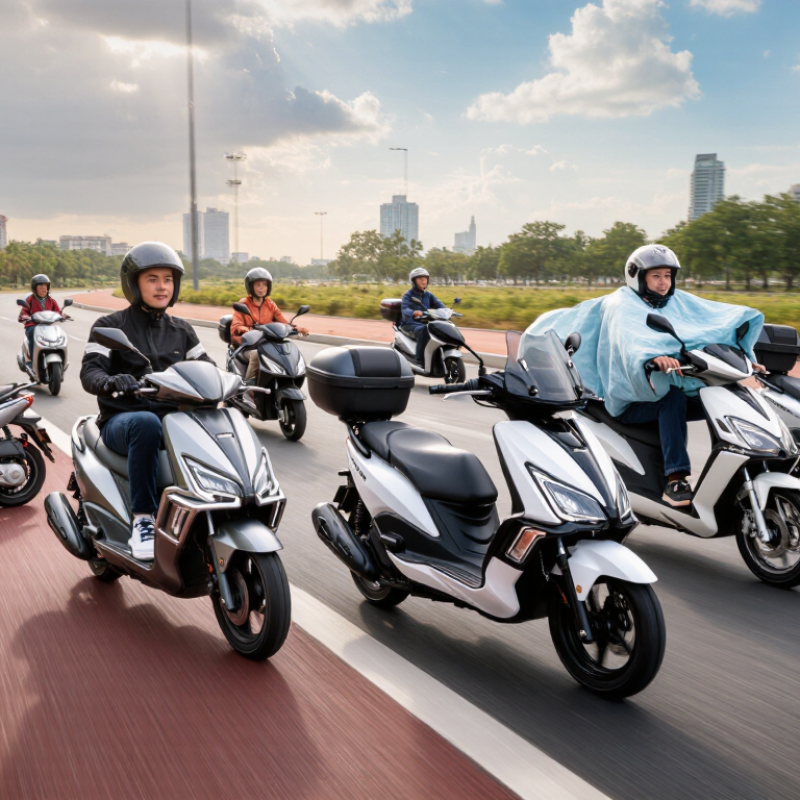
Electric two-wheeler manufacturing covers the design, engineering, production, and testing of powered vehicles with two wheels.
These vehicles include electric bicycles, scooters, mopeds, and motorcycles. Their power systems usually combine a battery pack, electric motor, controller, charger, and digital monitoring unit.
The manufacturing scope extends beyond vehicle assembly. It includes frame fabrication, motor integration, battery enclosure design, wiring, braking systems, lighting, software calibration, and quality inspection.
A reliable manufacturer also verifies thermal performance, water resistance, charging safety, and road durability. Small details matter. Loose connectors can reduce range or create service risks.
Manufacturers may produce major components internally or source them from specialist suppliers. This creates an important distinction between a full manufacturer, a system integrator, and a final assembler. The boundary is not always neat. Some companies design the platform but outsource most physical production. Others assemble imported systems with limited engineering control.
From a professional assessment perspective, manufacturing strength should be judged through traceable testing, consistent production records, spare-part support, and transparent safety procedures.
Battery performance deserves special attention because temperature, rider weight, road slope, and charging habits affect real-world range. Laboratory figures can mislead.
The sector is also expanding into connected dashboards, fleet monitoring, regenerative braking, and modular battery systems. These features can improve usability, but they add software and maintenance demands. A product may look advanced while remaining difficult to repair. That is worth questioning. Reliable manufacturing balances efficiency, safety, serviceability, and practical daily use.
Top Electric Two Wheeler Manufacturers Worldwide?
Key Markets Driving Global Electric Two-Wheeler Demand
China remains the largest force in electric two-wheelers. Dense cities, mature battery supply chains, and practical commuting habits support strong demand. Manufacturers compete through affordable scooters, longer-range motorcycles, and fast charging systems. Local delivery fleets also create steady commercial sales. However, urban policies differ widely between provinces, making market forecasts less certain.
India is expanding quickly through electric scooters and shared mobility services. High fuel prices encourage daily commuters to consider lower running costs. Public incentives, financing, and domestic assembly also influence purchasing decisions. In Bengaluru or Delhi, a charging point can change a buyer’s decision. Still, uneven infrastructure and battery concerns limit confidence for some households.
Southeast Asia shows another important pattern. Indonesia, Vietnam, and Thailand combine heavy motorcycle use with growing air-quality concerns. Battery swapping may suit couriers who cannot wait beside a charger. Europe demands stronger safety standards, reliable winter performance, and transparent battery information. Southern European cities often favor compact scooters for short trips. Latin American markets are developing through delivery work and urban congestion. Local repair networks matter greatly there. This point is sometimes underestimated. I also question whether sales growth alone proves success. Manufacturers need durable batteries, accessible service, and responsible recycling systems. Without those foundations, impressive registration figures may hide expensive ownership problems.
Leading electric scooter and motorcycle manufacturers worldwide are being shaped by more than sales volume. The strongest producers combine battery engineering, motor efficiency, safety testing, and dependable after-sales support. The International Energy Agency’s Global EV Outlook 2024 identifies two- and three-wheelers as the most electrified road-transport segment. In several major markets, electric models already represent more than half of new two-wheeler sales. That figure reflects daily commuting, not only environmental preference.
Manufacturers with broad distribution usually focus on practical details: removable batteries, weather-resistant connectors, strong frames, and repairable controllers. BloombergNEF’s Electric Vehicle Outlook 2024 also shows that electric two-wheelers remain especially important in emerging urban markets, where purchase costs and fuel savings strongly influence buyers. Range matters, but charging access matters more. A 60-kilometer vehicle can outperform a longer-range model when batteries swap quickly near workplaces.
The ranking is not clean. Some manufacturers sell millions of low-speed scooters, while others build fewer, faster motorcycles with higher safety specifications. Comparing them directly can mislead readers. Certification coverage, battery warranty terms, software reliability, and parts availability deserve equal attention. The European Environment Agency has repeatedly linked transport electrification with lower operational emissions, yet manufacturing impacts and electricity sources still require review. Numbers help, but local roads expose weaknesses quickly.
| Manufacturing Hub | Primary Product Segment | Typical Vehicle Classes | Manufacturing Strength | Battery and Powertrain Focus | Market Position | Key Regulatory or Industry Reference |
|---|---|---|---|---|---|---|
| China | High-volume electric scooters and urban two-wheelers | Low-speed scooters, mopeds and commuter motorcycles | Large-scale production, mature supplier networks and extensive domestic adoption | Hub motors, removable battery packs, lithium-ion batteries and standardized charging solutions | Global volume leader | International Energy Agency reports China as the dominant global market for electric two- and three-wheelers |
| India | Electric scooters and practical commuter motorcycles | Urban scooters, commuter motorcycles and delivery vehicles | Strong two-wheeler manufacturing base supported by domestic demand and electrification policies | Removable and fixed battery systems, connected motor controllers and battery-management systems | Fast-growing market | National vehicle-registration data and government electric-mobility incentive programs track continued growth in electric two-wheeler adoption |
| Southeast Asia | Electric scooters for dense urban and suburban travel | Mopeds, step-through scooters and light delivery vehicles | Established motorcycle supply chains and expanding regional assembly capacity | Compact lithium-ion packs, swappable batteries and low-maintenance electric drivetrains | Emerging production center | Regional transport strategies increasingly identify electric two-wheelers as a practical solution for urban emissions reduction |
| Japan and South Korea | Premium scooters, motorcycles and specialized mobility products | Urban scooters, performance motorcycles and compact commuter vehicles | Advanced engineering, quality control, electronics integration and safety development | High-efficiency motors, advanced battery-management systems and connected vehicle functions | Technology-focused | Vehicle safety and battery standards are commonly aligned with international two-wheeler and electrical safety requirements |
| European Union | Electric mopeds, motorcycles and premium urban mobility vehicles | L1e and L3e category vehicles, electric scooters and motorcycles | Strong emphasis on design, safety certification, sustainability and premium engineering | Integrated battery packs, regenerative braking, advanced displays and connected systems | Regulation-led market | EU vehicle type-approval rules classify powered two-wheelers into L-category vehicle classes |
| United Kingdom | Electric scooters, motorcycles and fleet-oriented vehicles | Electric mopeds, motorcycles and last-mile delivery vehicles | Engineering-led development, specialist manufacturing and urban fleet applications | Removable batteries, fast charging, telematics and fleet-management software | Specialist and fleet-driven | Road-legal electric motorcycles and mopeds must meet applicable vehicle approval, lighting and safety requirements |
| United States and Canada | Performance motorcycles, commuter scooters and recreational vehicles | Electric motorcycles, scooters, off-road vehicles and utility models | Focus on performance, software, recreational use and premium product differentiation | High-capacity battery packs, liquid cooling, advanced traction control and fast charging | Premium and performance-oriented | Products are generally subject to regional road-safety, electrical and transportation certification requirements |
| Taiwan | Urban electric scooters and battery-swapping vehicles | Commuter scooters, delivery scooters and shared-mobility vehicles | Dense urban use cases, mature scooter infrastructure and strong battery-swapping experience | Standardized removable batteries, automated swapping stations and connected charging networks | Battery-swapping leader | Battery-swapping systems are widely evaluated as a way to reduce charging time for high-utilization scooters |
| Latin America | Affordable electric scooters and light motorcycles | Commuter motorcycles, delivery vehicles and urban scooters | Growing demand for low operating costs, delivery mobility and urban transportation | Simple drivetrains, removable batteries and cost-sensitive lithium-ion solutions | Developing adoption | Electrification is supported by urban air-quality goals, lower fuel costs and increasing demand from delivery fleets |
| Africa | Electric motorcycles for commercial and passenger transport | Motorcycle taxis, delivery motorcycles and utility two-wheelers | Strong potential for fleet electrification where fuel savings and vehicle utilization are high | Battery swapping, pay-per-use energy services and durable low-maintenance powertrains | High-impact emerging market | Electric motorcycle programs frequently prioritize commercial fleets because of their high daily mileage and fuel-cost sensitivity |
Top Electric Two-Wheeler Manufacturers Worldwide?
Leading electric two-wheeler manufacturers now compete through battery technology, factory efficiency, and after-sales support. Their differences become clearer when technology meets production reality. Some prioritize high-density batteries and longer range. Others focus on simple motors, lower weight, and easier maintenance. Both strategies can work. It depends on daily traffic, climate, and charging access.
Battery management systems help control temperature, charging speed, and cell balance. These details affect safety and long-term performance. Production scale also matters. Large factories can standardize frames, motors, and electronic components across many models. This usually reduces costs and improves parts availability. Yet high output does not always mean better quality. A rushed assembly line can create inconsistent panel gaps, weak connectors, or software faults.
Regional manufacturers may produce fewer units but adapt designs to local roads and weather. Their smaller scale can support faster feedback from riders. It may also limit research budgets and replacement inventory. Independent tests should compare real riding range, not only laboratory figures. Published range can disappoint. Testing should include hills, heavy loads, stop-start traffic, and cold mornings. Charging time deserves similar attention, because a fast charger is useless where suitable infrastructure remains limited.
Manufacturers are also investing in connected dashboards, regenerative braking, and modular batteries. These features sound impressive, but practical value varies. A reliable motor and strong suspension may matter more than a crowded screen. Buyers should examine warranty terms, service training, battery replacement costs, and software support. No production model is perfect. The strongest comparison remains evidence-based, transparent, and slightly skeptical.
Electric two-wheelers are moving from early adoption into practical urban transport. Riders now expect reliable range, quick charging, and predictable maintenance costs. In field testing, battery performance often changes with temperature, traffic, tire pressure, and rider weight. A dashboard range estimate can look precise, yet real streets remain messy. This gap requires honest product communication and better testing methods.
Battery technology remains central to industry development. More compact cells can improve acceleration without making the vehicle heavier. Improved thermal management also supports safer, steadier operation during long commutes. Charging networks are expanding near apartments, workplaces, and transit stations. However, access is still uneven in smaller cities. Battery swapping may help delivery riders, but it needs common safety and connection standards.
Software is becoming part of the vehicle’s identity. Remote diagnostics can detect unusual battery behavior before a breakdown occurs. Over-the-air updates may improve energy use, though they cannot repair poor hardware design. Manufacturers are also exploring recyclable materials, modular batteries, and easier component replacement. Repairability matters. A scooter should not become disposable because one small electronic module fails. Industry forecasts often sound confident, but consumer habits can change quickly. I would question any prediction that ignores charging access, resale value, weather, and local riding culture.
Strong manufacturers combine battery engineering, efficient motors, safety testing, and reliable after-sales service. Production scale also helps control costs. Support matters.
Not necessarily. A 60-kilometer model may suit commuters when quick battery swapping is available nearby. Range is not everything. Charging access can matter more.
Look for temperature control, cell balancing, charging protection, and clear replacement costs. Removable batteries can help apartment residents without private garages. Details matter.
Test hills, heavy loads, stop-start traffic, and cold mornings. Laboratory figures may look generous. Real roads disagree. Independent testing offers stronger evidence.
No. Large factories can improve consistency and parts availability, but rushed assembly may create weak connectors or software faults. More units do not guarantee perfection.
Weather-resistant connectors, strong frames, repairable controllers, and modular batteries can simplify daily ownership. A dependable suspension may matter more than a crowded dashboard.
Charging speed helps only when suitable equipment is nearby. A fast charger becomes less useful during apartment living or limited workplace access. Infrastructure shapes convenience.
Review warranty coverage, service training, battery replacement pricing, and software support. Confirm local parts availability. A good vehicle can become frustrating without repairs.
No. Traffic, climate, road quality, electricity sources, and charging access change the ownership experience. Smaller regional producers may understand local roads better. I might underestimate that advantage.
They can lower operational emissions during use, especially in busy urban travel. Manufacturing impacts and electricity sources still deserve review. The answer is not perfectly simple.
The Electric Two Wheeler industry covers the design, production, and distribution of battery-powered scooters, motorcycles, and other compact two-wheeled vehicles intended for personal transportation, delivery services, and urban mobility. Demand is expanding most rapidly in densely populated cities and emerging markets, where affordable operating costs, reduced emissions, traffic congestion, and government support are encouraging consumers and businesses to adopt electric mobility. Different regions show distinct preferences, ranging from lightweight scooters for short commutes to higher-performance motorcycles for longer journeys.
Global manufacturers compete through battery capacity, charging speed, motor efficiency, safety systems, software integration, production scale, and overall affordability. Some focus on practical commuter models, while others emphasize premium performance, connected features, or commercial fleets. The industry is also being shaped by improvements in battery chemistry, smarter energy management, expanded charging networks, recyclable materials, and more efficient manufacturing. As technology becomes more accessible and infrastructure improves, electric two-wheelers are expected to play an increasingly important role in cleaner, flexible, and cost-effective transportation worldwide.