What Is an Electric Cargo Tricycle and How Does It Work?

Time:2026-10-16 Author:Ethan
0%

An Electric Cargo Tricycle combines a stable three-wheel frame, a rechargeable battery, and an electric motor. It carries people, tools, groceries, or business supplies with less physical effort than a traditional cargo bike. Unlike a standard bicycle, it often uses a wide rear axle or two front wheels for added balance. The design can feel reassuring at low speed. It may feel different during tight turns.

Understanding how an Electric Cargo Tricycle works begins with its power system. The battery stores electricity and sends it to the motor through a controller. When the rider turns the pedal, a sensor detects movement and activates motor assistance. Some models use a throttle, while others rely only on pedaling. The motor then supports acceleration, hill climbing, and heavier loads. Braking systems convert the rider’s hand pressure into controlled stopping power. Mechanical details vary.

Real-world performance depends on more than motor size. Cargo weight, tire pressure, road surfaces, weather, and riding habits all affect range. A fully loaded tricycle may climb slowly, especially on steep streets. That matters. A properly adjusted drivetrain, charged battery, and well-maintained brakes improve safety and reliability. This guide examines the main components, operating process, practical advantages, and common limitations of these vehicles. It also questions popular claims, because advertised range rarely matches every rider’s daily conditions. Careful evaluation leads to better purchasing decisions.
What Is an Electric Cargo Tricycle and How Does It Work?

What Is an Electric Cargo Tricycle? Types, Structure, and 100–300 kg Payloads

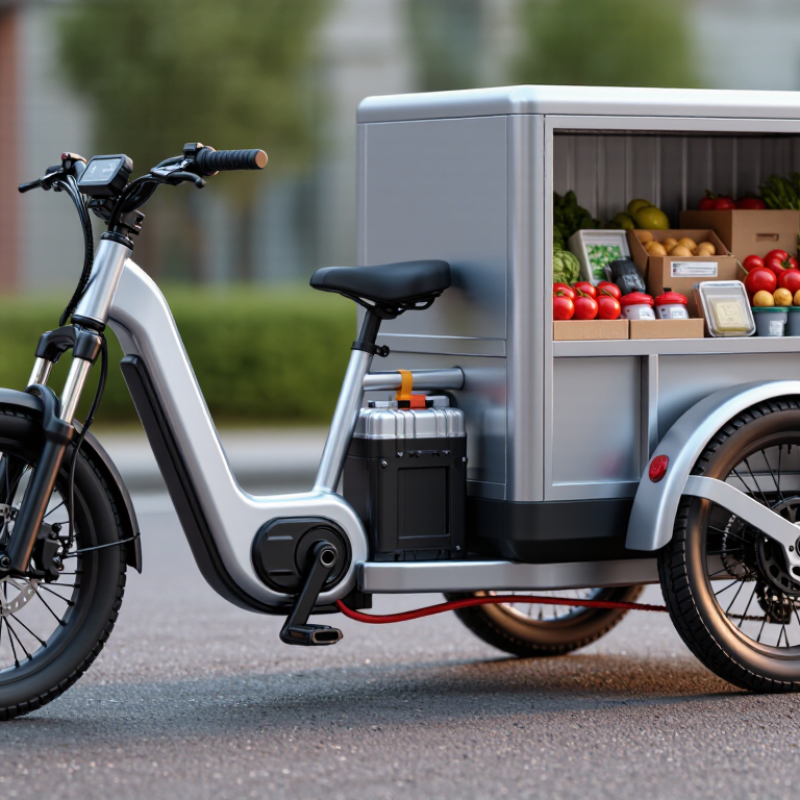
An electric cargo tricycle is a three-wheeled utility cycle with battery-powered assistance. It carries goods more steadily than a standard bicycle. The motor supports pedaling through a controller, while the battery supplies stored electrical energy. Common types include front-load, rear-load, and enclosed cargo tricycles. A front-load design places the box between the rider and front wheels. A rear-load model uses a platform or container behind the seat. Enclosed versions protect parcels from rain and dust. Choose carefully.

Its structure usually includes a reinforced frame, cargo deck, steering system, three wheels, brakes, battery, controller, and electric motor. Some motors drive the rear wheel; others work through the crank. The controller adjusts assistance from pedal input, speed, and selected settings. Mechanical disc or drum brakes help control heavier loads. Low cargo placement improves stability, especially during turns. Still, three wheels do not remove rollover risks.

Payload ratings commonly range from 100 to 300 kilograms, depending on frame strength, axle design, motor output, and braking capacity. The rating should include the cargo only or the full moving load, according to the technical manual. Confirm this detail before daily use. A 300-kilogram rating does not guarantee the same performance on steep roads. Heavy goods increase stopping distance and reduce battery range. Test the tricycle with sandbags first. That practical step can reveal weak steering, poor balance, or uncomfortable braking. The simple explanation is useful, but real streets are less forgiving.

Electric cargo tricycles typically use a battery-powered motor to assist the rider, while a rear box, flatbed, or reinforced cargo platform carries the load. The payload ranges shown are representative design ranges for common utility configurations; actual capacity depends on frame strength, motor rating, battery condition, braking system, road gradient, and local regulations.

How the 250 W Motor, Battery, and Controller Convert Power into Motion

An electric cargo tricycle uses a battery, controller, and motor to move heavy loads with less pedaling effort. Its 250 W motor changes electrical energy into rotational force at the wheel or drivetrain. The battery stores direct-current power in measured electrical cells. The controller manages that power carefully. It responds to pedal sensors or throttle input, then sends controlled current to the motor.

When a rider starts pedaling, the sensor reports movement to the controller. The controller increases motor assistance gradually, which helps prevent sudden jerks. More current usually creates more torque, especially during a slow hill climb. The motor turns its internal coils and magnets, producing wheel rotation. Depending on the design, gears or a chain transfer that rotation to the driving wheel. That part matters. A smooth controller setting can feel more useful than extra peak power.

In practical riding, cargo weight, tire pressure, wind, temperature, and hills affect battery range. A fully loaded box may require noticeably more current than an empty frame. I used to think the 250 W rating explained the whole system, but it does not. It describes nominal motor output, not every riding condition. Regular checks should include brake response, cable connections, tire condition, and battery charging behavior. Small details count. A weak connector or soft tire can quietly reduce efficiency, and real-world performance may differ from a specification sheet.

How Differential Drives and Three-Wheel Geometry Improve Low-Speed Stability

What Is an Electric Cargo Tricycle and How Does It Work?

An electric cargo tricycle combines a battery, motor, controller, and three-wheel frame. It carries people or goods with less physical effort. The motor adds torque when the rider presses the pedals or throttle. A controller adjusts power according to speed, load, and battery condition. A low center of gravity helps, but it never removes handling risks.

Differential drives are especially important at low speeds. During a turn, the outer rear wheel travels farther than the inner wheel. A differential lets both wheels rotate at different speeds. This reduces tire scrubbing, drivetrain strain, and sudden steering resistance. Without it, a tight corner can feel jerky. The difference is noticeable on concrete, where the tires may otherwise drag and squeak.

Three-wheel geometry creates a stable support triangle while the vehicle is moving slowly. Two wheels across the rear or front provide lateral support, while the third wheel guides direction. However, stability depends on more than wheel count. A tall cargo box, uneven loading, or a sharp turn can shift the center of gravity. Keep heavy items low and centered. A routine loading test may reveal an uncomfortable lean that specifications do not show.

This is where my earlier assumption needs correction: “three wheels” does not automatically mean effortless stability. Smooth steering and moderate speed still matter.

How EN 15194 Limits EPACs to 250 W and 25 km/h in European Markets

An electric cargo tricycle combines a stable three-wheel frame, a loading platform, pedals, battery, and electric motor. It can carry groceries, tools, or small parcels through crowded streets. The motor does not replace pedaling. It supports the rider when pressure on the pedals activates the control system.

In European markets, many pedal-assist cargo tricycles are treated as EPACs under EN 15194. The motor’s continuous rated power must not exceed 250 W. Assistance must also stop when the tricycle reaches 25 km/h, or sooner if the rider stops pedaling. These limits affect the controller, speed sensor, wiring, and motor calibration. A motor may produce a short peak above 250 W, but its declared continuous rating remains important for classification.

The standard also addresses electrical safety, braking, structural strength, and control behavior. That matters on a loaded tricycle, where stopping distances can change quickly. A heavy box shifts the balance. Wet paving adds another problem. The speed cutoff can feel abrupt on a long incline, especially with cargo onboard. That is normal, but not always comfortable. EN 15194 is a technical standard, not a universal replacement for every national requirement. Manufacturers and importers still need accurate testing, documentation, and market-specific checks. Small details matter.

How Sensors, Hydraulic Brakes, and Payload Ratings Support Safe Operation

An electric cargo tricycle combines three wheels, a battery, a motor, and a cargo platform. Its controller reads pedal force, wheel speed, and motor temperature. Sensors adjust assistance gradually, especially when starting with a heavy load. In systems following EN 15194 principles, motor assistance usually stops at 25 km/h. That limit cannot replace careful riding. The World Health Organization reported about 1.19 million annual road deaths in 2023, highlighting the importance of controlled speed and visibility.

Hydraulic disc brakes transmit lever pressure through fluid, producing consistent braking with less hand effort. This matters when cargo shifts forward during sudden stops. A brake sensor can also cut motor assistance when the lever moves. NHTSA recorded 1,105 bicyclist deaths in the United States during 2022. That figure covers bicycles broadly, so applying it directly to cargo tricycles would be misleading. Still, it reinforces a practical lesson: braking distance deserves regular testing. Small mistakes become serious with momentum.

Payload ratings describe the maximum combined weight of rider, cargo, battery, and equipment. They are not suggestions. A properly rated frame should remain stable, but uneven loading can still affect cornering. Keep dense items low and centered. Check tire pressure before every loaded trip. Hydraulic systems need leak inspections, while sensors need functional checks. The rating may assume smooth roads, moderate speed, and balanced cargo. Real delivery routes rarely cooperate. This is where rider judgment remains essential.

What Is an Electric Cargo Tricycle and How Does It Work? – How Sensors, Hydraulic Brakes, and Payload Ratings Support Safe Operation

System or Safety Dimension Typical Component or Rating How It Works Contribution to Safe Operation Important Operating Guidance
Vehicle Layout Two front wheels and one rear wheel, or two rear wheels and one front wheel An electric motor assists pedaling or propels the vehicle through a rechargeable battery and motor-control system. The three-wheel layout provides a stable platform for carrying goods, although stability can change during turning or on uneven surfaces. Slow down before corners and keep heavy cargo low and centered.
Electric Motor Common systems use a low-voltage brushless motor, often in the 36–48 V range The controller regulates electrical current from the battery to produce wheel torque according to the rider's input and selected assistance level. Controlled torque helps the vehicle start smoothly and reduces abrupt acceleration when correctly calibrated. Motor power, speed assistance, and legal limits vary by jurisdiction and vehicle configuration.
Battery and Energy Supply Rechargeable lithium-ion battery with a battery-management system The battery-management system monitors voltage, temperature, and current while helping protect the battery from overcharging and excessive discharge. Electrical protection lowers the risk of battery damage and helps maintain predictable motor assistance. Use the specified charger, keep the battery dry, and stop using it if it is swollen, leaking, or unusually hot.
Pedal-Assist Sensor Cadence sensor or torque sensor A cadence sensor detects crank rotation; a torque sensor measures force applied to the pedals. The controller then adjusts motor assistance. Assistance begins only when the control system detects an intended riding input, helping prevent unexpected motor engagement. A torque sensor generally provides more proportional assistance, while a cadence sensor typically offers simpler control.
Brake-Cutoff Sensor Electrical brake-lever cutoff switch When the brake lever is pulled, the switch signals the controller to reduce or stop motor output. It limits simultaneous motor drive and braking, which can shorten stopping time and reduce control surprises. Test the cutoff function before carrying a full load.
Hydraulic Brakes Hydraulic disc brakes with fluid-filled lines Hand-lever movement pressurizes brake fluid, pushing pistons that clamp brake pads against a disc rotor. Hydraulic systems provide strong, consistent braking with relatively low hand effort, especially useful for heavier vehicles. Inspect fluid leaks, hose damage, pad wear, and rotor condition; hydraulic systems require correct bleeding procedures.
Mechanical Braking Principle Front and rear brakes operated independently or together Friction between brake pads and rotors converts moving energy into heat and reduces wheel speed. Using both brakes progressively can provide better stopping control than relying on only one brake. Avoid locking a wheel, particularly on wet, loose, or downhill surfaces.
Payload Rating Maximum permitted total load stated on the vehicle label or manual The payload limit normally includes cargo, accessories, and sometimes the rider, depending on the manufacturer's definition. Remaining within the rated limit helps preserve frame strength, braking performance, tire capacity, and handling stability. Never estimate capacity from cargo-box size alone; use the lowest applicable rating for the frame, rack, axle, tires, and brakes.
Load Distribution Heavy items placed low, secured, and close to the vehicle's center of gravity Proper placement keeps the center of gravity within a more manageable position relative to the wheelbase and track width. It reduces sway, excessive steering effort, and the risk of lifting an inside wheel during a turn. Secure every item so it cannot slide, fall, or interfere with steering, pedals, wheels, or brake lines.
Tires and Inflation Load-rated tires inflated within the pressure range printed on the sidewall or specified in the manual Correct inflation supports the load and maintains the tire's intended contact patch with the road. Proper pressure improves grip, steering response, rolling efficiency, and resistance to pinch damage. Check pressure when tires are cool and inspect for cuts, bulges, and excessive wear.
Frame and Cargo Structure Reinforced frame, cargo box, platform, or rear rack with a separate capacity rating The structure transfers cargo forces through the frame, wheels, axles, and suspension or rigid mounts. A sound structure prevents shifting loads and reduces the chance of fatigue cracks or mounting failure. Do not drill, weld, or modify load-bearing parts without qualified engineering approval.
Lighting and Visibility Front white light, rear red light, reflectors, and side visibility features where required Lighting and reflective materials make the vehicle more visible to drivers, cyclists, and pedestrians. Improved conspicuity supports safer operation in darkness, rain, and low-contrast conditions. Keep lenses clean and check that lights remain visible after cargo is loaded.
Turning and Stability Low-speed steering with a wider track than a standard bicycle Three-wheel geometry resists some side-to-side movement but can transfer load outward during a turn. Moderate speed and smooth steering reduce the possibility of wheel lift or tipping. Take corners slowly, avoid sharp steering inputs, and lean or steer according to the vehicle's design instructions.
Pre-Ride Inspection Brakes, tires, steering, lights, battery connection, fasteners, and cargo restraints A short inspection identifies defects before the vehicle is exposed to traffic, hills, or a heavy load. Early detection reduces the likelihood of brake failure, loss of control, or cargo detachment. Perform the inspection before every ride and repeat it after loading or making adjustments.
Stopping Distance Influenced by speed, total mass, road surface, slope, tire grip, and brake condition More speed and mass increase the energy that the brakes must dissipate; wet or loose surfaces reduce available traction. Allowing extra following distance gives the rider more time to brake progressively and maintain control. Practice emergency braking in an open area with a light load before operating at maximum payload.

FAQS

What does a 250 W motor do in an electric cargo tricycle?

It converts battery power into rotational force. This force helps turn the wheel or drivetrain with less pedaling effort.

How does the controller manage motor assistance?

The controller reads pedal movement, throttle input, speed, and temperature. It then sends controlled current to the motor.

Why can a smooth controller setting matter more than extra power?

Gradual assistance reduces sudden jerks. It also feels more predictable when starting with a heavy box or climbing slowly.

What affects the tricycle’s practical battery range?

Cargo weight, tire pressure, wind, hills, and temperature all matter. A loaded platform may use noticeably more energy.

What does a 250 W rating actually describe?

It normally describes continuous rated motor output. It does not explain every riding condition or possible short-term power peak.

How do the 25 km/h and 250 W limits affect pedal-assist models in Europe?

Many qualifying models must stay within a 250 W continuous rating. Motor assistance must stop at 25 km/h or when pedaling stops.

Can the speed cutoff feel uncomfortable?

Yes, especially on a long incline with cargo. The cutoff may feel abrupt, although it supports the intended operating limit.

Why are hydraulic disc brakes useful on a loaded tricycle?

They transfer lever pressure through fluid and provide consistent braking. This helps when cargo shifts during a sudden stop.

What does a payload rating include?

It usually includes the rider, cargo, battery, and equipment. Treat the rating as a maximum, not a casual suggestion.

How should cargo be arranged for better stability?

Keep dense items low and near the center. Uneven loading can change cornering behavior, even with three wheels.

Which checks should be completed before a loaded trip?

Check tire pressure, brake response, cable connections, battery behavior, and visible leaks. Small faults can quietly reduce control.

Are technical limits enough to guarantee safe riding?

No. Wet paving, shifting cargo, soft tires, and poor visibility still create risks. Rider judgment remains necessary, and my earlier confidence in specifications was too simple.

Conclusion

An Electric Cargo Tricycle is a three-wheeled electric vehicle designed to carry people, goods, or equipment with greater stability than a conventional bicycle. Its frame, cargo platform or box, wheels, suspension components, and reinforced braking system are typically engineered for payloads of approximately 100–300 kg, depending on the model. Common designs include front-loading, rear-loading, and utility configurations, each suited to different transport tasks and road conditions.

The vehicle’s battery supplies energy to a controller, which regulates power to a 250 W motor and converts electrical energy into controlled motion. Sensors can measure pedaling, speed, and braking, helping the system respond smoothly and efficiently. Differential drive systems and three-wheel geometry improve balance and maneuverability at low speeds, especially when carrying heavy loads. Hydraulic brakes can provide stronger, more consistent stopping performance, while clear payload ratings help operators avoid unsafe overloading. In European markets, EPAC requirements under EN 15194 generally limit assisted power to 250 W and assistance speed to 25 km/h.


Ethan

Ethan

Ethan is a seasoned marketing professional with a deep expertise in our company's innovative product line. With a passion for sharing knowledge and insights, he takes the lead in regularly updating our corporate blog, where he explores industry trends, product features, and effective marketing......