An Electric Trail Bike is a bicycle designed for off-road riding with an electric motor that assists while you pedal. It combines a trail-focused frame, wide tires, and suspension with a rechargeable battery. The motor can make steep climbs and longer rides feel more manageable, but it does not remove the need to steer, brake, or choose a safe line. You still ride a bike. Just with extra support.
The term can mean different things. Some brands use it for pedal-assist mountain bikes built for varied trails; others use it more broadly. Check the bike’s specifications rather than relying on its name. Look at the motor’s assistance settings, battery capacity, suspension travel, weight, and intended terrain. A display may show estimated range, but real distance depends on hills, rider weight, temperature, tires, and assist level. Range is never a simple promise.
On a rocky path, larger tires and suspension can help smooth impacts, while balanced handling matters when turns tighten. Still, more power is not always better. A heavier bike may feel less nimble, and a high assist setting can use battery faster than expected. That matters. Riders should also learn the controls before tackling unfamiliar trails and follow relevant local access and safety requirements. The category is useful, but its labels are imperfect. Understanding the parts—and how they fit your routes—gives a clearer answer to what an Electric Trail Bike can actually do.
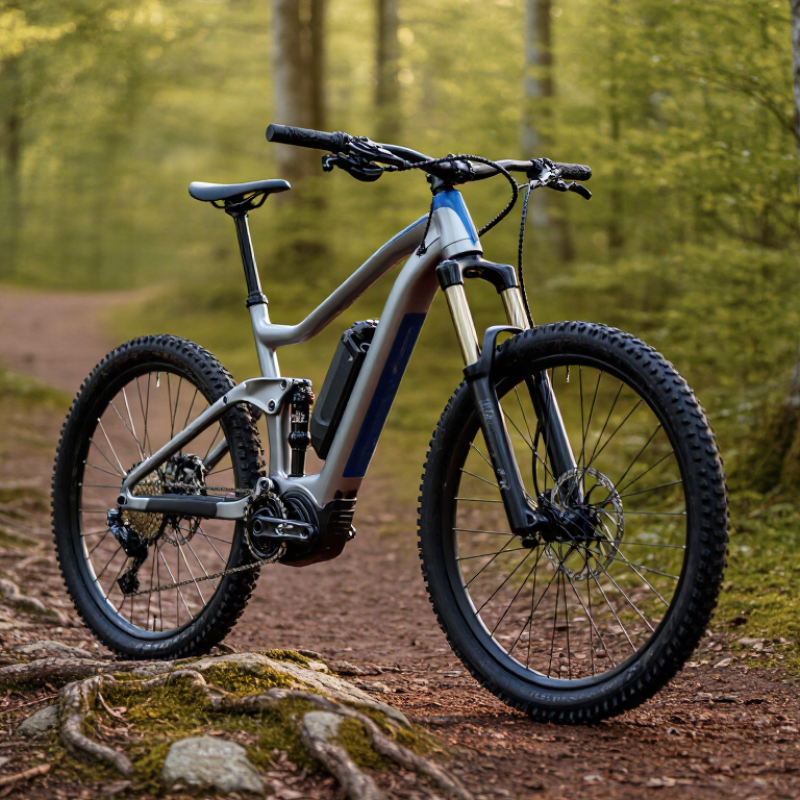
What Defines an Electric Trail Bike: Pedal Assist, Motor, and Off-Road Design
An electric trail bike combines pedal assistance with geometry and components built for uneven ground. Its motor adds power while the rider pedals, responding to cadence or pressure at the pedals. The feel matters: smooth assistance helps maintain traction on a loose climb, while abrupt power can spin the rear tire. The NPD Group’s 2020 U.S. retail tracking data recorded a 145% increase in e-bike sales over 2019, reflecting fast-growing interest in electric cycling. That figure covers e-bikes broadly, not trail models alone.
Trail design is more than a strong motor. Wider, knobbier tires bite into dirt, and suspension helps the wheels follow roots and rocks. Hydraulic disc brakes offer controlled stopping on steep descents. A sturdy frame and well-positioned battery also affect balance; extra weight can feel noticeable when lifting the bike over a log. Look for assistance that can be adjusted to the terrain, plus a display that stays readable in changing light. Small details count. A quiet motor is pleasant, but fit and handling matter more. One trade-off is easy to miss: added power can make a long climb easier, yet the heavier bike may feel awkward on tight switchbacks. That part deserves a test ride.
How EU EPAC Rules Limit Assistance to 250 W and 25 km/h
What Is an Electric Trail Bike?
An electric trail bike combines a bicycle frame, off-road tires, and a motor that assists pedaling. In the EU, the familiar EPAC category has specific limits. The motor’s maximum continuous rated power must not exceed 250 watts. Assistance must stop when the rider stops pedaling and cut out before speed reaches 25 km/h.
These limits describe sustained rated output, not necessarily every brief power spike shown in product material. A steep, rocky climb may still feel demanding; the motor does not replace balance, traction, or leg effort. On a narrow climb, assistance can fade as speed approaches the cutoff. Then the rider supplies the remaining effort. Not a free climb. Small detail, big difference.
For shoppers, check the technical documentation for continuous rated power and assistance cutoff behavior, rather than judging only by a peak-power figure. A display showing speed is useful, but it does not prove how the system is classified. EPAC describes a regulatory category, not a guarantee that every bike marketed as a trail bike meets its conditions. Rules and vehicle categories can differ by use and configuration, so the exact model specification matters. A muddy trail can make that paperwork feel distant, but the motor’s behavior is still shaped by it.
How U.S. Class 1–3 E-Bikes Set Assist Limits of 20–28 mph
What Is an Electric Trail Bike?
An electric trail bike pairs bicycle pedals with a motor that helps on climbs and long rides. In the United States, its Class 1–3 label describes how assistance works and the speed at which it stops. Class 1 assists only while pedaling, up to 20 mph. Class 2 also reaches 20 mph, but can provide motor assistance without pedaling. Class 3 assists while pedaling up to 28 mph. It does not mean the bike travels at that speed on every trail.
These limits matter when choosing a bike for local routes. A rider grinding up a loose, rocky slope may value steady assistance more than top speed. On a wide path, a Class 3 bike’s higher assist limit may feel more noticeable. Still, the motor does not replace careful braking or good line choices. The class label is only part of the picture. Trail access rules can vary by location, so check local guidance before riding. Also consider the bike’s weight: lifting it over a fallen branch can be awkward, even when the motor makes the climb easier. Assist limits are useful, but they do not describe the whole ride.
What Is an Electric Trail Bike? — How U.S. Class 1–3 E-Bikes Set Assist Limits of 20–28 mph
| Class |
How the Motor Assists |
Maximum Assisted Speed |
Typical U.S. Class Definition |
Trail-Riding Considerations |
| Class 1 |
Assistance is provided while the rider pedals; no motor-only throttle propulsion under the commonly used class definition. |
20 mph |
Pedal-assist e-bike with a motor rated at 750 watts or less under the widely used state-classification model. |
Often permitted on some non-motorized trails where e-bikes are allowed, but access depends on the land manager and local rules. |
| Class 2 |
Has a throttle that can propel the bike without pedaling; pedal assistance may also be available. |
20 mph |
Throttle-capable e-bike with motor assistance limited to 20 mph under the widely used state-classification model. |
Throttle capability may affect access. Check the specific trail’s rules rather than assuming Class 1 and Class 2 have the same access. |
| Class 3 |
Typically provides assistance while pedaling; throttle rules vary by jurisdiction and vehicle configuration. |
28 mph |
Pedal-assist e-bike with a speedometer under the widely used state-classification model. The commonly used model limits motor power to 750 watts or less. |
May face additional restrictions compared with Classes 1 and 2. Some jurisdictions set age, helmet, roadway, or trail-access requirements. |
| Understanding the speed limit |
The class speed is the point at which motor assistance must stop, not a maximum speed the rider can reach by pedaling or coasting. |
Actual requirements and class definitions can differ by state, local law, and land manager. Check the rules for the place where you plan to ride. |
| “Electric trail bike” |
This is a general description, not a separate U.S. e-bike class. A trail bike’s motor-assist class does not by itself determine whether it is allowed on a particular trail. |
How Trail E-Bike Motors and Batteries Are Rated in Nm and Wh
What Is an Electric Trail Bike?
How Trail E-Bike Motors and Batteries Are Rated in Nm and Wh
Motor torque is measured in newton-metres, or Nm. It describes the turning force the motor can provide. On a steep, loose climb, stronger torque can help the bike keep moving at low speeds. That matters. But the number alone does not tell you how natural or controllable the assistance will feel. Motor tuning, gearing, rider input, and trail conditions all play a part. A high Nm figure is not automatically the best fit for every rider.
Battery capacity is measured in watt-hours, or Wh. Think of it as the amount of energy the battery stores, not a guaranteed distance. More Wh can support longer rides, but range also depends on elevation, rider weight, temperature, tires, and assistance level. Two rides with the same battery can end very differently. It is easy to focus on the biggest number and overlook battery weight or how much range your usual routes actually need.
Tips: Compare Nm and Wh alongside the bike’s weight and your local trails. Check how assistance feels on a short climb, if possible. Keep in mind that range estimates can be imperfect; real conditions often are, too.
Which Safety Standards Apply: UL 2849 for E-Bike Electrical Systems
What Is an Electric Trail Bike?
Which Safety Standards Apply: UL 2849 for E-Bike Electrical Systems
An electric trail bike combines pedal power with an electric motor, battery, and controls. Those parts must work together safely, especially when a bike bumps over rough ground.
UL 2849 is a safety standard for e-bike electrical systems. It assesses hazards such as fire and electric shock, including under abnormal operating conditions. It is not a test of frame strength, braking, or a rider’s trail skills. That distinction matters.
When checking a bike, look for evidence that the complete electrical system—not just one battery or charger—was evaluated to UL 2849. A component’s certification alone does not prove the whole bike meets the standard.
Check the exact model and certification details with the seller or testing organization. Standards and local requirements can differ, too. A label can be reassuring, but it is easy to misread; ask what equipment it covers.
On a trail, inspect cables for cuts and connectors for looseness after a rough ride. Keep charging equipment dry and use only the specified charger. These habits do not replace independent testing, but they can help reveal problems early.
Conclusion
An Electric Trail Bike is a pedal-assisted bicycle designed for uneven paths, climbs, and other off-road terrain. Its motor adds power as the rider pedals, while features such as a sturdy frame, capable tires, and controlled handling help it manage changing surfaces. In the European EPAC category, assistance is generally limited to a 250-watt continuous-rated motor and must stop when pedaling ends or the bicycle reaches 25 km/h. In the United States, Class 1 and Class 2 assistance is limited to 20 mph, while Class 3 pedal assistance can continue up to 28 mph; local requirements may differ.
Motor torque, measured in newton-metres (Nm), indicates the turning force available to help with steep or technical sections. Battery capacity, measured in watt-hours (Wh), gives a useful indication of stored energy, though actual range depends on terrain, rider input, and conditions. UL 2849 addresses the electrical system safety of e-bikes, including components such as the battery, charger, and motor system.